

THE PERFORMANCE...
...WHERE MY FRIENDS COME TO LIFE

Image Created Using Canva (@uniqorns)
BE PREPARED
“Before anything else, preparation is the key to success.” - Alexander Graham Bell. A good performance is dependent of being prepared. After I craft the story for my “friend”, I create an outline with specific details and facts highlighted. The main reason why I transfer my story into an outline, rather than relying on a script, is because I want to know the story, not memorize it. Over the years I have discovered that attempting to memorize a script results in too many mistakes in my performance. When I mess up a line, my mind gets stuck for a brief moment as it tries to pick up the correct words. By knowing the story I am not putting myself in a position where this happens. It is easier for me to regroup my thoughts and tell a good story. This is my personal experience, however, you may want to use a script and forgo the outline.
Rehearsing, using my outline, multiple times helps me to feel more comfortable with the story. I get to know the story thoroughly as I practice. In addition I am able to work out issues with the flow and provide me with time to make revisions, including new ideas for props, costuming, and opportunities for interaction with the audience. During my rehearsals I am able to work on my accent, cadence, and timing. It builds my confidence.
Setting the “stage” for George and his story.
THE BIG DAY
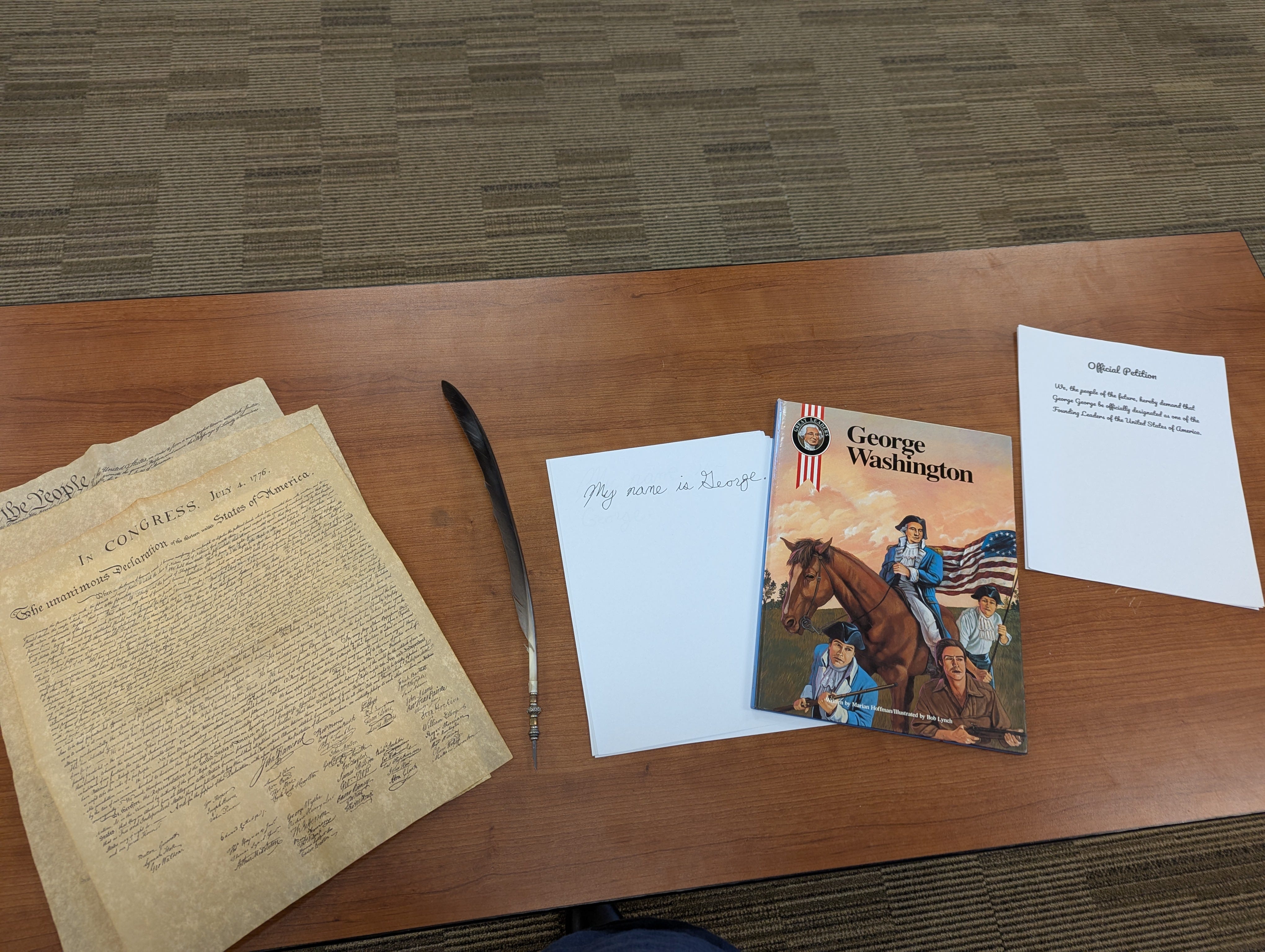
After crafting the story and practicing, it is time for the BIG DAY... the performance. For each one I have a list of what items I need to be sure to pack with me for the day - costume, props, outline, etc. After arriving at school, I “set the stage” by placing what I need, where I need it. I put my outline is places that look natural, somewhere I can quickly glance at - within the book and documents that George uses - in the hats that Major Sideburns has with him.
Typically I do multiple performances in a day. When that happens, I might use the outline during the first performance, but not look at it for the later ones. The outline is there for reference when needed - not something to depend on. That is why the preparation is critical.
You know the basic elements of a good presentation - eye contact, voice projection, etc. By knowing the story, not being dependent on the outline, and rehearsing multiple times, I am better able to demonstrate these elements. I do make mistakes and not all of my performances come across well, but I try my best and have fun.
One of my goals is to create a shared social experience. Therefore, interaction with the audience is important. It could be through questioning, sing-alongs, recruiting students to join my “friend” in an activity, etc.. The more involved the students are, the better they retain the learning and walk away with long-lasting memories.
Don’t be too tough on yourself if you don’t have a “perfect” performance. Only you know what you were planning for your story - not the audience. If you make a mistake or leave something out, don’t worry. Just go with the flow. I am definitely not perfect and do make (many) mistakes every time I tell one of my stories. Each mistake is a learning opportunity. I understand that I must “EMBRACE MY MISTAKES”, have a growth mindset, and enjoy myself. Regardless of miscues or errors - if you are having fun, your students will enjoy the learning experience.
Stories Connect Communities. Stories Inspire Imagination. Stories Enhance Education.